Planning a corporate event can feel overwhelming before you have even started. There is a venue to book, vendors to manage, a program to build, and a hundred small details that all need to come together on the same day. Miss one of them and it is usually the thing everyone remembers.
The good news is that a great event is rarely the result of luck or last-minute heroics. It comes down to preparation. The planners whose events run smoothly are simply the ones who decided early what needed to happen and when.
This guide walks you through the whole process of corporate event planning, from the first budget conversation to the follow-up after the last guest leaves.
It works for any type of event, whether you are hosting a conference, a product launch, a holiday party, a charity gala, or a company retreat.
At the end, you will find a free checklist template you can copy and use right away.
Before You Start: Get the Foundations Right

The most important decisions happen before any booking is made. Rushing past them is the main reason events go over budget or fall flat, so it is worth slowing down here.
Start with your objective. Ask yourself what the event is really for. A launch built to generate press coverage looks very different from an internal celebration meant to reward your team.
Write down one primary goal, then choose two or three metrics that will tell you whether you reached it, such as qualified leads, attendee satisfaction, or product sign-ups.
Everything you plan from here should serve that goal.
Then set your budget. Your budget shapes every decision that follows, so lock it in before you fall in love with ideas you cannot afford.
Break it into clear categories like venue and catering, AV and production, entertainment, staffing, branding, and marketing.
Keep around ten percent aside as a contingency, because something unexpected always comes up.
Setting clear goals and a clear budget early also makes your life much easier at the end. When it is time to report on results, your spending lines up neatly with the outcomes you set out to measure.
Lock In Your Date and Venue
Choose your date with your audience in mind. Check it against major holidays, industry conferences, and competitor events that would pull from the same crowd. Once the date is set, move quickly on the venue, since the best spaces are often booked months ahead.
When you tour venues, look past the photos. Check the capacity, parking and transport access, power and internet, accessibility, and how easy it is for vendors to load in and out.
Ask for floor plans early too, because they decide where everything goes, from seating and staging to your registration desk and photo activations.
Always visit in person before you sign anything, and get every promise in writing. A venue that looks perfect online can feel very different once you are standing in the room.
Book Your Vendors and Production Team
Your vendors shape how the event actually feels, so choose them carefully and brief them well. Most corporate events need catering, AV and production, photography and video, entertainment, decor, and security.
Give one person clear ownership of coordinating them all, because that single point of contact is what keeps everything aligned.
Pay special attention to AV and production, since technical problems are the ones guests remember most. Confirm your microphones, speakers, and screens, agree on who will run the live program, and always schedule a full rehearsal before doors open.
Reliable LED screens and projectors make sure every presentation and video lands the way you intended.
Once vendors are booked, share your run of show with each of them. This is the master timeline for the day, and when everyone is working from the same one, the whole event flows far more smoothly.
Plan the Experience, Not Just the Agenda
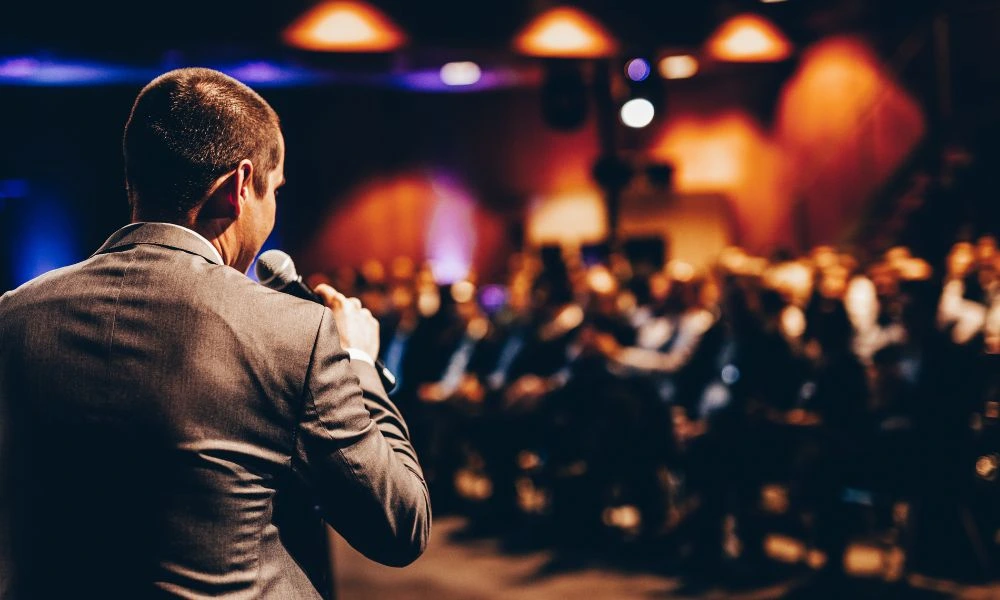
An agenda tells people where to be. An experience gives them a reason to stay engaged and to talk about your event long after it ends. This is where a corporate event earns its budget, so it deserves real attention.
Think about the moments guests will actually want to share. Interactive entertainment is one of the most reliable ways to create them. An AI photo booth or a 360 video booth gives attendees branded content they post on the spot, which carries your event far beyond the room. Tie it to a quick sign-up and it doubles as an easy way to capture leads.
The atmosphere matters just as much. Entertainment options for corporate events can include a DJ, an emcee to keep the program moving, live music, or hands-on activities that get people involved.
A professional event DJ, a custom dance floor, and well-chosen backdrops can turn a plain function room into a real occasion. You can see the full range of options on our booths page.
Image: Guests enjoying an interactive photo activation at a corporate event.
Handle Branding, Invitations, and Communications
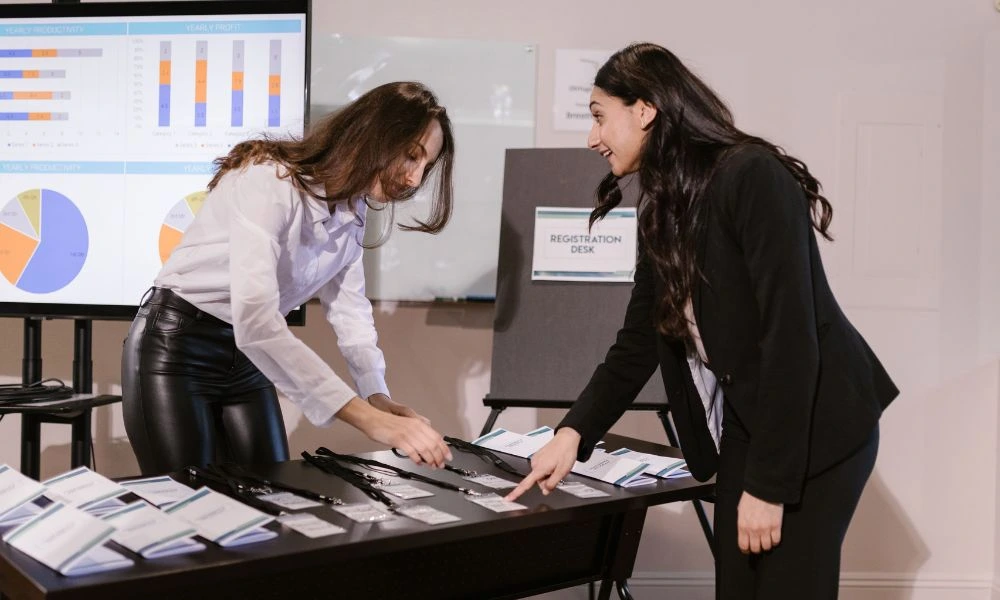
Your branding should feel consistent from the first invitation to the final thank-you email. Decide early how it will show up across signage, screens, photo activations, printed materials, and anything you post online, so every touchpoint looks like it belongs to the same event.
Next, map out the guest experience from start to finish. Plan your invitations, RSVP tracking, reminder messages, and a smooth check-in process.
A slow check-in is the first impression no one wants to give, so it is worth getting right. If the event is public facing, line up your social media plan, any press outreach, and a simple way to collect and reuse the content created on the day.
Good communication before, during, and after the event has a direct effect on both turnout and how guests feel about it.
Run the Day With Confidence

By the day of the event, there should be no big decisions left to make, only a plan to follow. Everything you prepared now comes together.
Your run of show is your single source of truth. It lists every timing and cue, with a clear owner for each task, and it tells your team exactly who is keeping the program on schedule. Arrive early, oversee the load-in, and check that the room is set up the way the floor plan intended.
Run your AV checks, and confirm catering, staffing, and registration are all ready before guests arrive.
Keep a printed copy of the schedule and an emergency contact list on hand. Something unexpected usually happens at some point, and a prepared team handles it quietly, without the guests ever noticing.
Do Not Skip the Follow-Up
The event is not over when the lights come up. The follow-up is where you capture the value you worked so hard to create, and it is the step most often rushed.
Send your thank-you messages, share the photos and videos while interest is still high, and get any leads you collected into the right hands quickly.
Internally, pull your results together and measure them against the goal you set at the start, so you can show the real return on the event. Gather feedback from your team and vendors while it is fresh, and note what you would repeat or change next time.
This is also the moment to reuse your content across social media, email, and future campaigns, so a single event keeps working for you for weeks.
The Ultimate Corporate Event Planning Checklist (Free Template)
Copy the tables below and adapt them to your event. The checklist is organized by timeline, so you always know what should be happening and when. Fill in the owner and status columns as you go.
3 to 6 Months Before
| Done | Task | Owner | Status |
| ☐ | Define your primary objective and success metrics | ||
| ☐ | Set the budget with category breakdowns and a contingency | ||
| ☐ | Confirm the date and check for conflicts | ||
| ☐ | Shortlist and visit venues | ||
| ☐ | Book the venue and sign the contract | ||
| ☐ | Identify and reach out to key vendors | ||
| ☐ | Decide the event format and overall program |
2 Months Before
| Done | Task | Owner | Status |
| ☐ | Confirm all core vendors (catering, AV, photo/video, entertainment, decor, security) | ||
| ☐ | Book your entertainment and photo activations | ||
| ☐ | Request floor plans and confirm the room setup | ||
| ☐ | Finalize your event branding and design | ||
| ☐ | Open RSVPs and start promotion | ||
| ☐ | Plan the guest experience from invitation to check-in | ||
| ☐ | Order signage, printed materials, and branded assets |
1 Month Before
| Done | Task | Owner | Status |
| ☐ | Finalize the run of show with timings and cues | ||
| ☐ | Assign who will run the live program | ||
| ☐ | Confirm final headcount with catering and the venue | ||
| ☐ | Give each team member a clear responsibility | ||
| ☐ | Confirm AV requirements and backup equipment | ||
| ☐ | Send reminder communications to attendees | ||
| ☐ | Brief all vendors with the run of show and load-in times |
1 Week Before
| Done | Task | Owner | Status |
| ☐ | Reconfirm load-in and setup times with every vendor | ||
| ☐ | Hold a final walkthrough or planning call | ||
| ☐ | Print the run of show and emergency contact list | ||
| ☐ | Prepare registration and check-in materials | ||
| ☐ | Test all AV, links, and presentations | ||
| ☐ | Confirm staffing and brief your team |
Event Day
| Done | Task | Owner | Status |
| ☐ | Arrive early and walk the space | ||
| ☐ | Oversee load-in and vendor setup | ||
| ☐ | Confirm the room matches the floor plan | ||
| ☐ | Run your AV and technical checks | ||
| ☐ | Confirm catering, check-in, and signage are ready | ||
| ☐ | Distribute the run of show and brief the team | ||
| ☐ | Manage the event against the schedule | ||
| ☐ | Capture content and lead data throughout | ||
| ☐ | Oversee an orderly load-out |
After the Event
| Done | Task | Owner | Status |
| ☐ | Send thank-you messages to attendees | ||
| ☐ | Share event photos and videos | ||
| ☐ | Pass captured leads to sales or marketing | ||
| ☐ | Review results against your objective | ||
| ☐ | Hold a team and vendor debrief | ||
| ☐ | Repurpose content for future marketing |
Turn Your Checklist Into an Experience
A checklist keeps your event organized, but the experience is what makes it worth attending. The planners who get both right are the ones whose events people remember and look forward to the following year.
GC Event Studio is a corporate events company that helps brands handle the part guests remember most, from AI photo booths and 360 video booths to DJs, dance floors, LED screens, and fully branded activations.
Whether you need full corporate event planning and management or just the entertainment, we make it easy, so you can focus on running a flawless event.
To plan the experience side of your next corporate event, contact us today.
Frequently Asked Questions
How far in advance should I start planning a corporate event?
For most corporate events, three to six months gives you a comfortable lead time. Larger conferences and high-profile launches often need six months or more, mainly to lock in the best venues and vendors.
What is the most commonly forgotten item in event planning?
A contingency budget and a clear run of show for the day are the two most common gaps. Both are easy to overlook, and both make a big difference when something unexpected happens.
What are the different types of corporate events?
Common types include corporate meetings and conferences, product launches and brand activations, holiday parties, charity events and galas, company retreats and offsite events, employee and client appreciation events, and high-end experiential events. Each has a different goal, so plan the format and entertainment to match.
How do I measure whether a corporate event was successful?
Decide on your success metrics before the event, then measure against them afterward. Common ones include qualified leads, attendee satisfaction, media coverage, content shared, and sign-ups tied to the event.
What kind of entertainment works best for corporate events?
Interactive formats usually perform best, because they get guests involved and create content they want to share. AI photo booths, 360 video booths, and a professional DJ are reliable choices for most corporate audiences.
Can I use this checklist for any type of corporate event?
Yes. The template is organized by timeline, so it works for launches, conferences, galas, and holiday parties alike. Just adjust the specific tasks to fit the size and goals of your event.