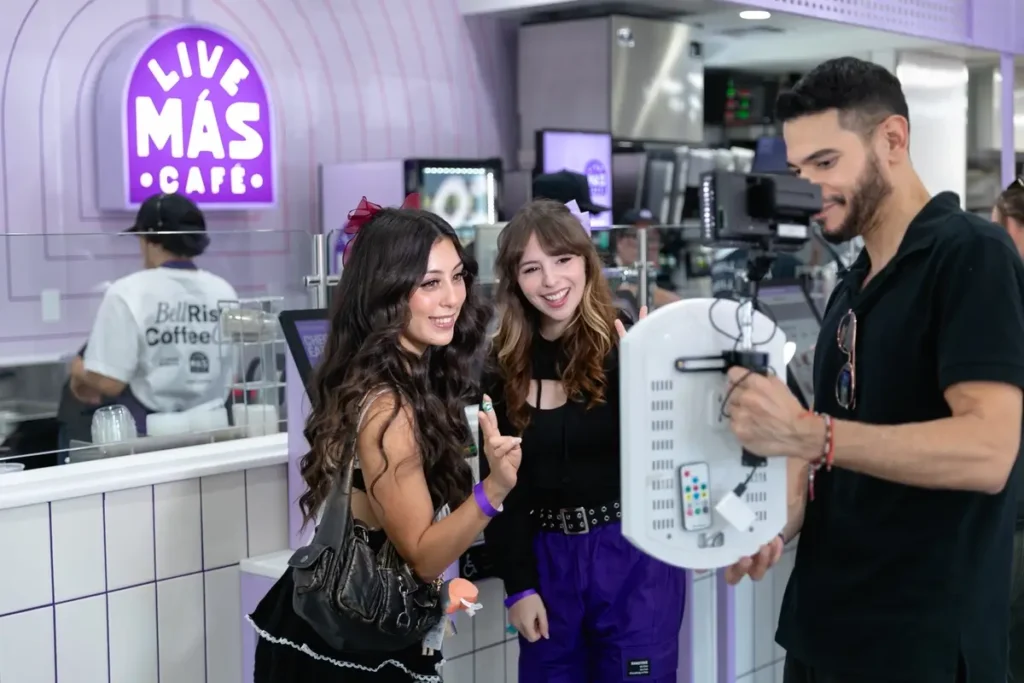
Most marketing works by repetition. You put a message in front of people enough times and hope some of it sticks.
Experiential marketing takes a different route. It gives people something to take part in, and participation tends to stay with them far longer than another impression ever could.
That is really the whole argument for it. When someone acts inside a brand moment, whether they are trying a product, posing for a camera, or playing along with an activation, they stop being an audience and become part of the story. That shift is what turns interest into buying, and one good moment into a wave of word of mouth.
The benefits are real and increasingly measurable, and the market reflects that. Global experiential marketing spend reached a record $128.35 billion in 2024, according to PQ Media. Below is what that investment actually buys, backed by data, with an honest look at what it takes to get there.
Proof First: The NBA All-Star Weekend Activation
When Ticketmaster activated at NBA All-Star Weekend, they needed more than a backdrop and a logo. All-Star is one of the loudest, most camera-ready weekends in sports, and the goal was to turn that energy into something fans could join and share rather than simply walk past.
The experience recorded 782 total sessions and 796 shares, while generating 216,316 in total reach and 72,124 impressions. Most sharing happened through text messaging, demonstrating how an in-person activation can extend into digital, peer-to-peer engagement.
This is where experiential marketing becomes especially valuable for brands: a single physical interaction can create additional touchpoints far beyond the event floor.
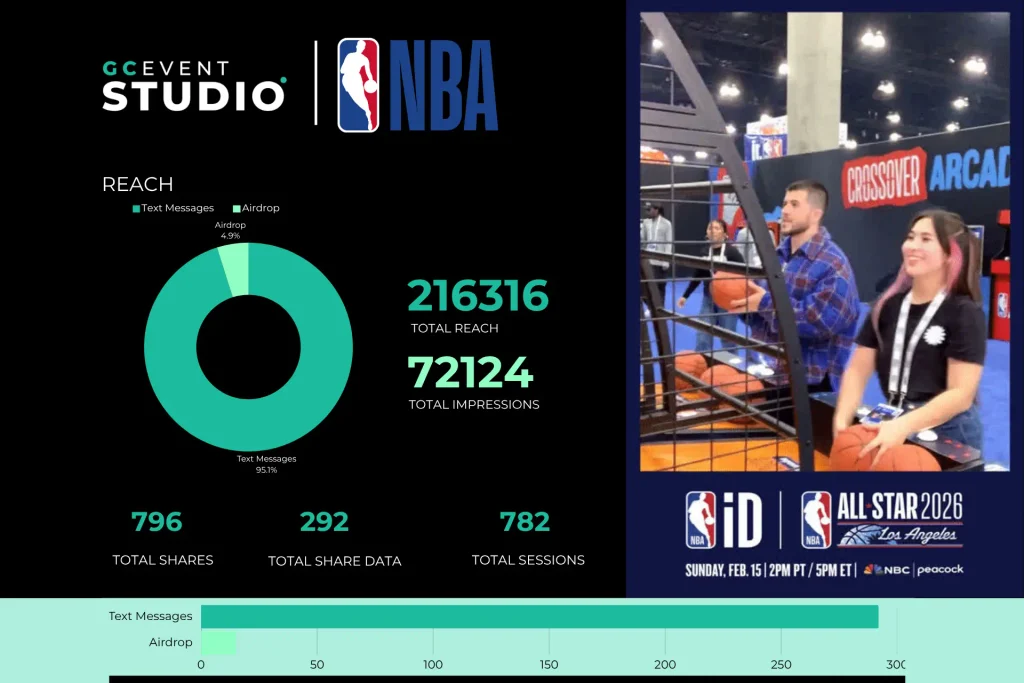
For us, that activation captures the whole idea. The equipment and the technology matter, but only because they get fans to take part and then broadcast the moment themselves.
That is the difference between an event people attend and an experience they carry with them.
It is also why brands like Netflix, Amazon Prime, Audi, Reebok, and the NFL have trusted us with their activations.
Benefit 1: It Moves People to Buy
The most important benefit is commercial. Experiences influence what people actually purchase, not just how they feel about a brand.
According to the EventTrack 2026 study from Event Marketer, 61% of consumers say they are more inclined to purchase after attending an event. That is a meaningful majority, and it points to something traditional advertising struggles with.
Experiential shortens the distance between interest and action, because the person who has already engaged with the brand is much closer to buying from it.
Marketers clearly see the payoff. The same study found that 84% of consumer marketers and 86% of B2B marketers plan to increase their event spending in 2026, which is a strong signal from the people who measure returns most closely.

Benefit 2: It Builds Connection and Credibility
People do not form lasting relationships with logos. They respond to how a brand made them feel in a specific moment, and a well run activation is one of the few ways to create that feeling on purpose.
The effect is especially clear in B2B, where trust and understanding drive long sales cycles. EventTrack 2026 found that 85% of B2B attendees feel more educated about a product or service after an event.
That kind of hands-on understanding is difficult to achieve through a landing page or a cold email, and it tends to carry into the buying conversations that follow.
The result is a warmer, more informed audience that already associates your brand with a positive experience before a sales team ever gets involved.
Benefit 3: Your Audience Becomes Your Media
One of the most valuable and often underrated benefits is distribution. A strong activation does not only reach the people in the room. It reaches everyone they share it with.
EventTrack 2026 found that 59% of attendees capture content at live experiences, and most of it ends up on social media.
That is earned reach carrying a level of trust paid media cannot buy, because a photo or video from a friend lands very differently than a sponsored ad.
The takeaway is to design the shareable moment rather than leave it to chance, and this is where interactive formats earn their place.
An AI photo booth or a 360 video booth turns every guest into a branded content channel and delivers the post while the event is still happening, exactly as the Roamer Booth did at All-Star.
How GC Event Studio Makes Activations Data Driven
The reason activations underperform is rarely the creative. It is that the value walks out the door unmeasured. We build our experiences to prevent that, so every interaction produces something you can act on later.
Our booths capture contact details at the point of engagement, with guests sharing their photos or videos by email or text. That turns a fun moment into an opt-in list your team can follow up with while interest is still high.
On the content side, every image and clip is branded automatically, so you can track shares, reach, and engagement rather than guessing at them.
We also help you decide what to measure before the event begins, whether that is leads captured, samples claimed, or content shared, and then set the experience up to produce it.
The result is an activation that entertains guests and delivers the reporting a brand needs to prove its return.
Getting the Full Benefit
None of these benefits are automatic, and that is the part most articles leave out. An activation can return several times its cost or prove almost nothing, and the difference usually comes down to how it was planned rather than how much was spent.
The activations that deliver tend to share a few things. They start with a single clear objective, so everyone knows what success looks like before the doors open. They give guests something genuine to do instead of something to watch. Also they build in a moment worth sharing. And they capture data at every interaction, so the audience can be followed up with afterward.
That last point is where measurement matters.
Impressions are the wrong scorecard, because they only tell you how many people were nearby. The numbers that actually reflect value are participation, content shared and its reach, leads captured, and purchases that follow.
Notably, EventTrack 2026 found that leads and data capture have become the top success metric for consumer events, ahead of foot traffic, which shows how the industry itself now defines a return.
The Takeaway
Experiential marketing is valuable because taking part changes behavior, and the data backs that up across purchase intent, credibility, and reach. But the return is designed, not guaranteed. The brands that define a clear goal, engineer a moment worth sharing, and measure real behavior are the ones that turn an event into results.
That is exactly how we approach every activation at GC Event Studio, from the Roamer Booth at NBA All-Star Weekend to AI photo booths, 360 video booths, and fully branded environments.
To plan an activation designed to perform, contact us today.
Frequently Asked Questions
What is experiential marketing? Experiential marketing is any campaign that invites people to interact with a brand in person, through formats such as product launches, pop ups, trade show activations, and branded events. The goal is participation rather than passive exposure.
Does experiential marketing actually drive sales? Yes. According to the EventTrack 2026 study, 61% of consumers are more inclined to purchase after attending an event, and marketers are responding by increasing their event budgets.
How do I measure the success of an activation? Focus on behaviors rather than impressions. Track participation, content created and shared, leads captured, and purchases that follow. EventTrack 2026 notes that leads and data capture are now the top success metric for consumer events.
Is experiential marketing only for big budgets? No. Budget affects scale, not viability. A focused activation with the right interactive format and a clear objective can outperform a larger one that has no measurement plan behind it.
Sources: EventTrack 2026, Event Marketer, PQ Media