
When you’re looking for a brand activation company, you’re not just shopping for event logistics. You’re looking for a partner who understands the difference between putting on a show and creating a moment people actually remember.
This article breaks down the brand activation landscape. It’s not a ranked list—just a snapshot of what’s out there, what matters, and how to make sense of it all when you’re comparing options.

Notable Brand Activation & Experiential Marketing Companies
Brands exploring experiential marketing often start by understanding the broader landscape. Below is a non-ranked snapshot of well-known brand activation companies operating across interactive events, pop-up retail experiences, and integrated brand experiences.
Jack Morton
A global experiential agency known for large-scale brand experiences, product launches, and integrated activations across live, digital, and hybrid environments.
Momentum Worldwide
An experiential marketing agency focused on consumer engagement, sponsorship activation, and immersive brand experiences for global consumer brands.
George P. Johnson (GPJ)
Specializes in experiential marketing and event-driven brand programs, particularly for enterprise and B2B organizations.
GCES
A full-service experiential marketing and brand activation company specializing in interactive event marketing, pop-up retail experiences, product sampling campaigns, and digitally integrated activations. GCES supports brands from concept to execution, with a strong focus on engagement, scalability, and measurable impact.
Freeman
Known for experiential event marketing, trade show activations, and branded environments that combine physical experiences with digital extensions.
MkG

An experiential marketing agency recognized for culturally relevant brand activations, pop-ups, and lifestyle-focused campaigns.
Wasserman Experiential
Delivers brand activation at the intersection of sports, entertainment, and live experiences.
Octagon Experiential
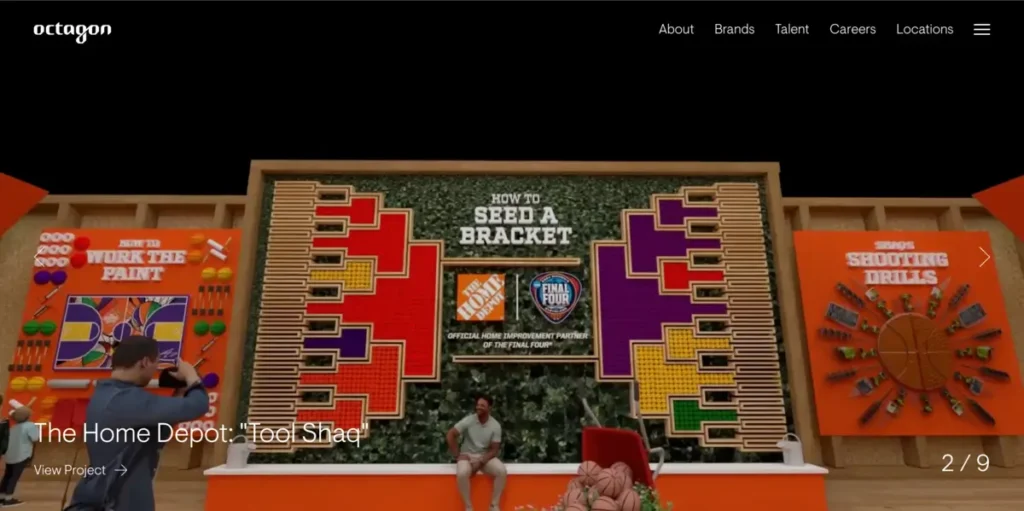
Focuses on experiential marketing and brand activation across sports, entertainment, and sponsorship-led platforms.
ASTOUND Group
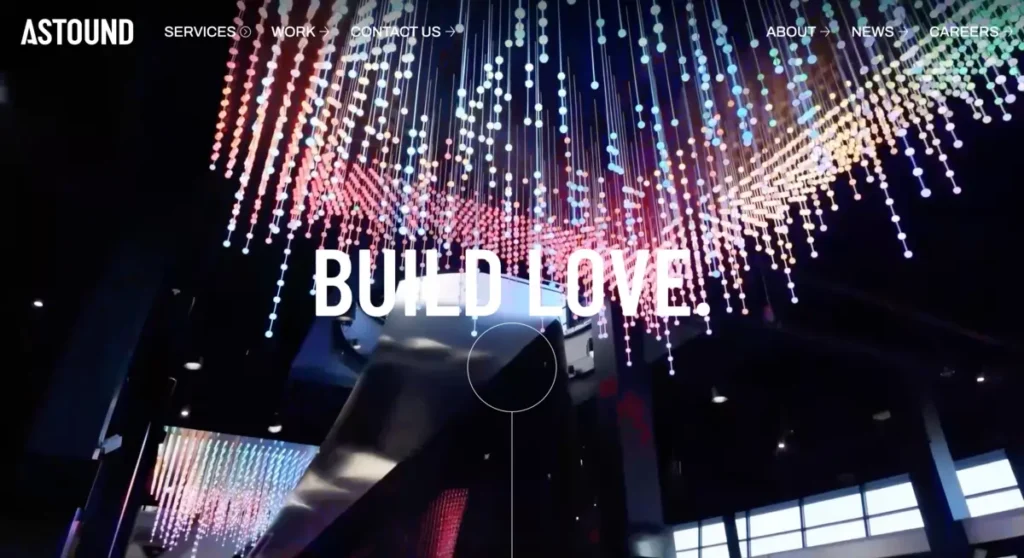
A design-led experiential agency known for pop-up installations, branded environments, and experiential retail executions.
These companies represent different approaches to the same challenge: creating brand moments that stick. Some focus on scale, others on cultural relevance, and some on specific verticals like sports or retail. What works for your brand depends on what you’re trying to do and who you’re trying to reach.
Brand Activation Isn’t an Event. It’s an Experience.
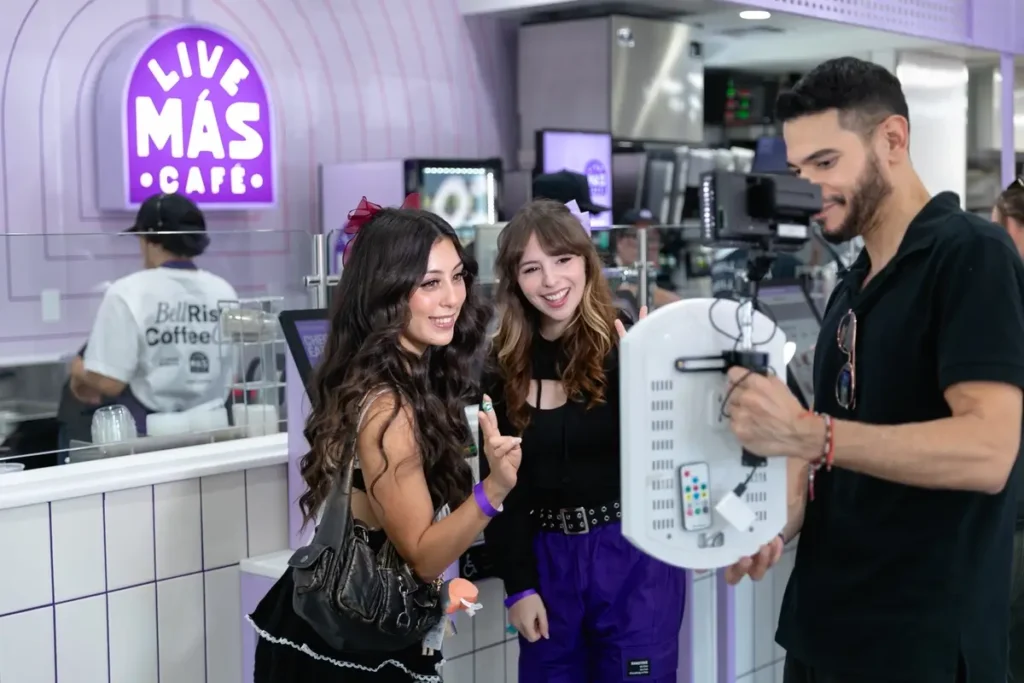
Most brands don’t struggle with visibility.
They struggle with connection.
People don’t remember banners.
They remember moments.
That belief sits at the core of how GCES approaches experiential marketing and brand activation.
The difference matters. An event happens to people. An experience involves them. One is something they attend. The other is something they participate in, talk about, and carry with them after they leave.
According to recent industry research, 91% of consumers say they’re more likely to buy from a brand after participating in a brand activation. That’s not about reach. It’s about what happens when reach becomes real.
From Attention to Participation
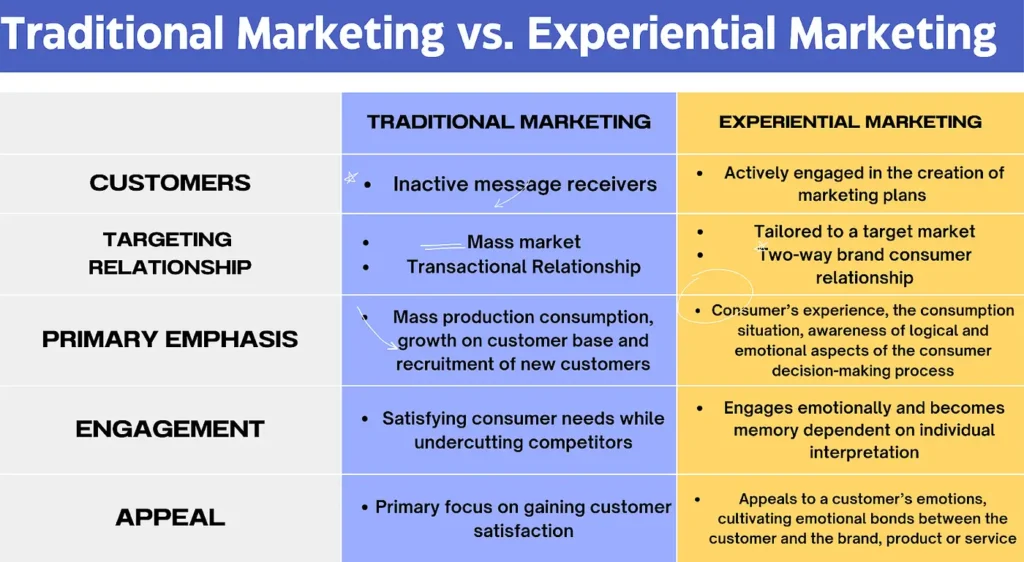
Traditional marketing talks at audiences.
Brand activation invites them in.
GCES designs experiential marketing campaigns that move people from passive observers to active participants—through interactive event marketing, pop-up retail experiences, and digitally enhanced brand moments.
The objective is never just reach.
It’s engagement that lasts beyond the event itself.
A successful activation doesn’t ask for attention.
It earns it.
Here’s what the data shows: 85% of consumers are more likely to make a purchase after participating in a live marketing event, and 70% of those participants become repeat customers.
Traditional advertising doesn’t produce those numbers because it can’t. It’s built to inform, not involve.
The shift from attention to participation is what separates experiential marketing from everything that came before it. You’re not interrupting someone’s day with a message.
You’re creating a reason for them to stop, engage, and remember.
What GCES Builds
Brand activation is often mistaken for logistics or one-day events.
In reality, it’s a connected experience system.
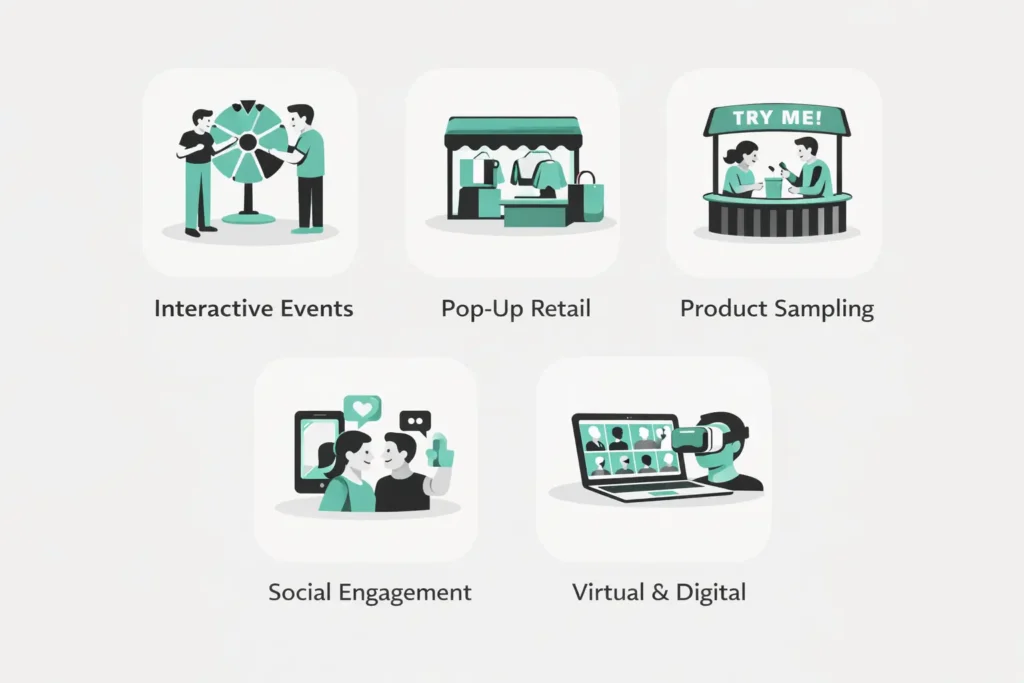
GCES delivers full-service brand activation, supporting brands across:
- Interactive event marketing designed for participation
- Pop-up retail experiences that blend storytelling with physical space
- Product sampling campaigns that encourage trial and conversation
- Social media-ready moments engineered for organic sharing
- Digital and virtual event solutions that extend reach
Every activation is designed to work on the ground and online, ensuring real-world engagement continues after the experience ends.
This matters more than it used to. 98% of consumers create digital or social content at events, and87% of event attendees share content on Instagram.
What happens at the activation doesn’t stay at the activation. It spreads. And when it spreads, it does so in the voice of the people who were there—not in your brand’s voice.
That’s the point. Word-of-mouth, but at scale.
The GCES Activation Framework
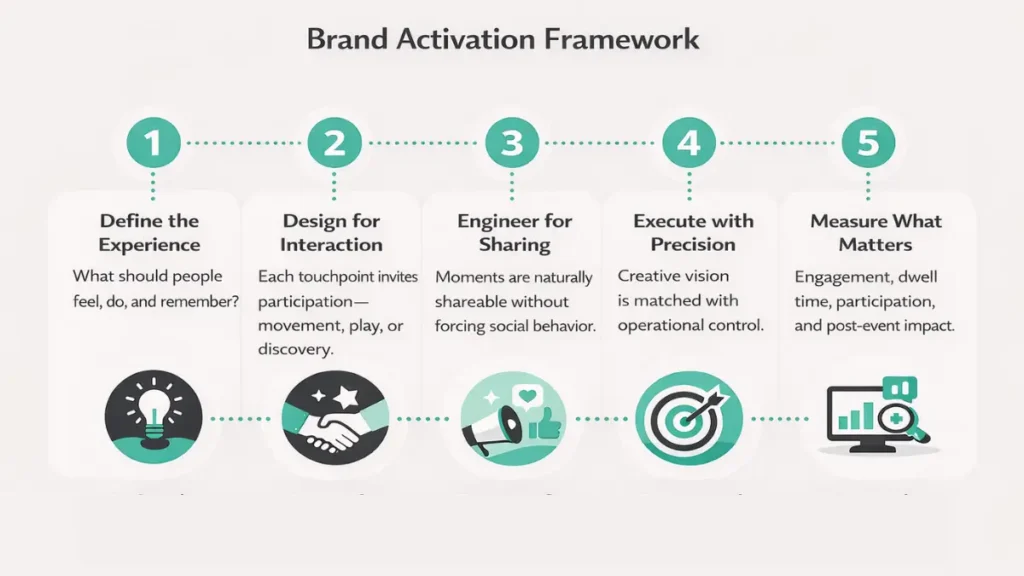
Rather than treating activations as one-offs, GCES follows a repeatable experience framework:
- Define the Experience
What should people feel, do, and remember? - Design for Interaction
Each touchpoint invites participation—movement, play, or discovery. - Engineer for Sharing
Moments are naturally shareable without forcing social behavior. - Execute with Precision
Creative vision is matched with operational control. - Measure What Matters
Engagement, dwell time, participation, and post-event impact.
This structure allows GCES to scale experiential campaigns while preserving authenticity.
Why does this framework matter?
Because consistency produces trust.
When you know what’s being measured, how it’s being designed, and what the experience is meant to do, you can make decisions earlier and with more confidence.
Industry data backs this up. 92% of marketers believe integrating experiential marketing within the overall sales and marketing funnel is vital to their success. But integration only works when there’s a process to integrate with. The framework creates that process.
Pop-Ups, Interactive Events, and Everything In Between
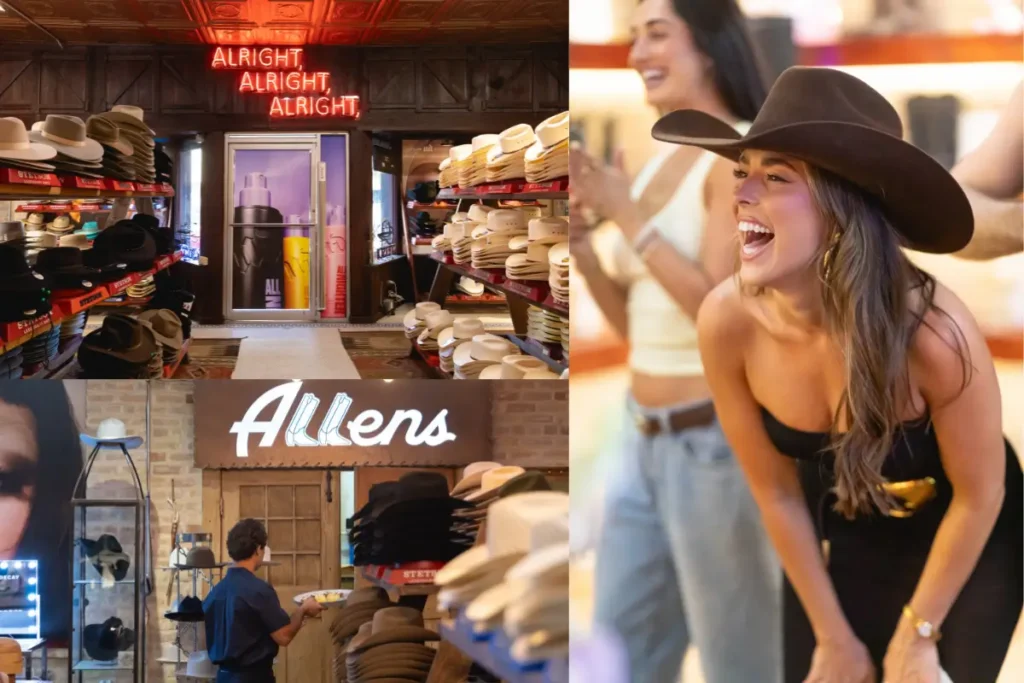
Pop-up retail experiences remain one of the most effective experiential formats—when designed with intent.
GCES pop-ups are not temporary stores.
They are temporary brand worlds.
Whether launching a product or activating a campaign, GCES pop-ups balance:
- Visual impact
- Visitor flow and interaction design
- Sampling and participation mechanics
- Digital extensions for amplification
The result is an experience people explore, not rush through.
Pop-ups work because they create urgency without pressure. They’re here today, gone tomorrow. That time constraint makes people show up. But what keeps them there is the experience itself—not the countdown.
48% of consumers are more likely to buy a new product if they can try it first. Pop-ups make trial easy. They remove friction. And when done right, they turn trial into conversation.
When Digital Becomes Experiential
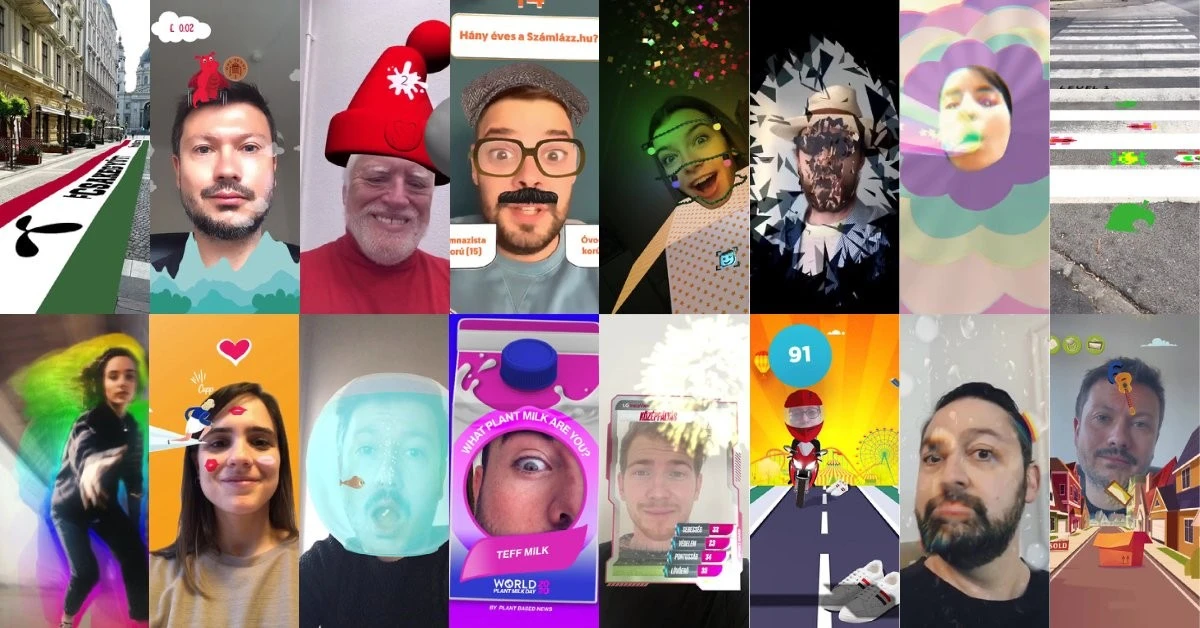
Experiential marketing no longer lives only in physical spaces.
GCES integrates virtual event solutions and AR/VR technology to support hybrid and digitally enhanced brand activations. These tools are used to:
- Transform product demos into immersive experiences
- Extend activations to remote audiences
- Add depth to live events without distraction
Technology isn’t added for novelty.
It’s added to deepen engagement.
The numbers tell the story. 50% of corporate meeting professionals used AI in 2025 to create tailored experiences for attendees. Meanwhile, with over 1 billion daily AR users expected globally, augmented reality has moved from experimental to expected.
But here’s the thing about technology in experiential marketing: it only works when it serves the experience, not the other way around. Nobody shows up to see your AR filter. They show up for the moment. If AR makes that moment better—more immersive, more surprising, more shareable—then use it. If it’s just there because it’s available, leave it out.
Measuring Experience, Not Just Exposure
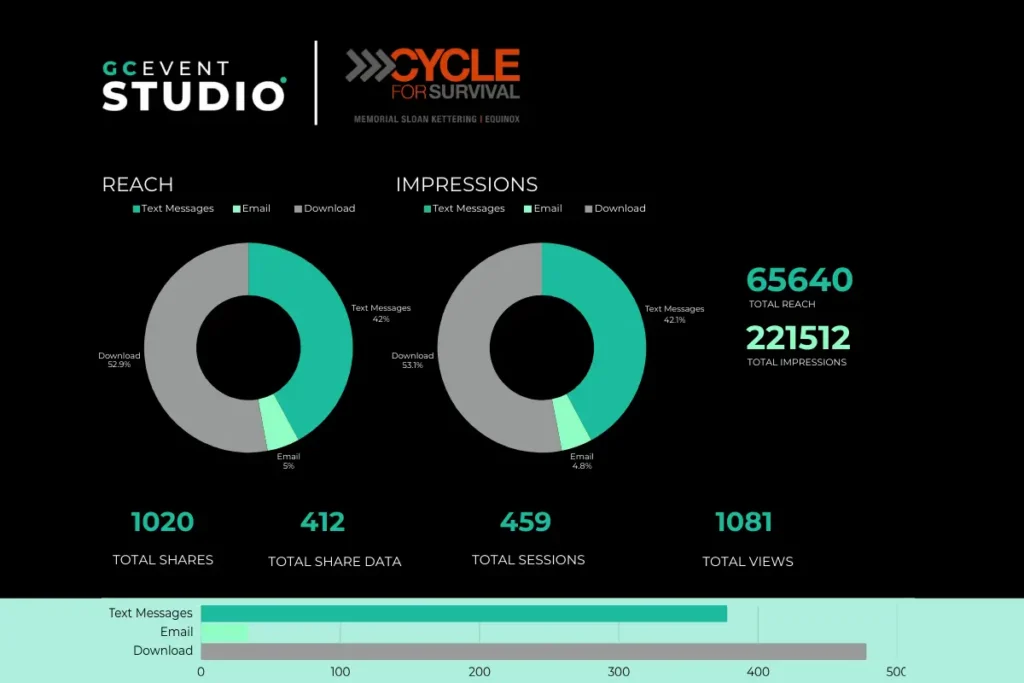
A visually impressive activation means little without insight.
GCES builds measurement into every campaign, tracking:
- Audience participation and dwell time
- Interaction and sampling conversion
- Social engagement and user-generated content
- Post-event brand recall and sentiment
This ensures experiential marketing connects back to broader business goals—without sacrificing creativity.
Measurement is where a lot of experiential marketing falls apart. Not because the tools aren’t there, but because the goals weren’t clear to begin with. If you don’t know what success looks like, you can’t measure it. And if you can’t measure it, you can’t justify the budget for the next one.
50% of marketers report improved ROI from event investments, and event ROI typically ranges between 25% and 34%. But those numbers only hold if you’re tracking the right things.
Exposure metrics—impressions, reach, eyeballs—are easy to collect but hard to act on. Engagement metrics—dwell time, participation rate, sampling conversion—are harder to collect but far more useful. They tell you what people actually did, not just what they might have seen.
And that’s the data that matters. Not how many people walked past your pop-up. How many walked in. How long they stayed. What they did while they were there. Whether they came back.
The Shift Toward Experiential Marketing
The industry is moving. Fast.
74% of Fortune 1000 marketers increased their experiential marketing budgets in 2025, driving global experiential marketing spend past $128.35 billion for the first time ever.
Why the surge?
Because people are tired of being sold to. They want to be involved.
80% of companies have increased their experiential marketing budgets, and those budgets now represent 10-30% of overall marketing spend. That’s not experimental money anymore. That’s strategic investment.
And it’s working. 77% of marketers say live experiences are the most effective marketing channel for their company, and 83% say events are critical for business growth.
But effectiveness isn’t just about what marketers think. It’s about what consumers do.
91% of consumers feel more positively about a brand after participating in an experiential marketing campaign.40% say experiential marketing makes them more loyal to a brand. And 87% believe experiential marketing has a greater impact on their emotions than traditional advertising.
When emotion drives the experience, behavior follows. That’s not marketing theory. That’s what the data shows.
What Makes a Good Brand Activation Company

Not all brand activation companies are built the same.
Some are great at creative. Some are great at logistics. A few are great at both. Fewer still know how to connect creative and logistics to business outcomes.
Here’s what to look for:
- End-to-End Capability
Can they take an idea from concept to execution, or do they hand it off halfway through? Handoffs create gaps. Gaps create problems. - Scalability
Can they run one activation in one city, or fifty activations in fifty cities with the same quality and consistency? Scale reveals competence. - Measurement Built In
Do they measure results, or just deliverables? Deliverables are what you paid for. Results are what you care about. - Digital Integration
Do they think about the experience ending when people leave, or do they design for what happens next? The best activations don’t stop when the event stops. - Industry Experience
Have they done this before? With brands like yours? In markets like yours? Experience doesn’t guarantee success, but it reduces the chances of failure.
And here’s the one that matters most: do they understand what you’re trying to accomplish, or just what you’re trying to do?
There’s a difference. What you’re trying to do is the activation. What you’re trying to accomplish is the outcome. A good brand activation company focuses on the outcome and builds the activation around it.
How Experiential Marketing Changed

Ten years ago, experiential marketing was a novelty.
Now it’s a necessity.
The change didn’t happen overnight. It happened because traditional channels stopped working the way they used to. People got better at ignoring ads. They installed blockers. They skipped pre-rolls. They scrolled past sponsored content without even registering it.
But you can’t install an ad blocker for real life.
That’s why experiential marketing works. It exists in the one space that can’t be filtered, blocked, or skipped: physical reality.
93% of consumers say live events have a larger influence on them than TV ads. Not because live events are flashier. Because they’re real.
The shift toward experiential marketing also reflects a broader change in how people make purchasing decisions. Trust in advertising has eroded. People don’t believe what brands say about themselves. They believe what other people say. They believe what they experience firsthand.
This is why brands using experiential marketing receive three times the word-of-mouth awareness of those that don’t. Word-of-mouth can’t be bought. It has to be earned. And it’s earned through experiences that are worth talking about.
The Economics of Experiential Marketing
Budget is always a concern.
Experiential marketing isn’t cheap. But neither is any other form of marketing when you’re doing it right. The question isn’t whether it costs money. The question is whether it’s worth it.
The data says yes.
Experiential marketing activations deliver 65% of a brand’s total ROI in marketing. That’s not just competitive with other channels. That’s dominant.
For context:brands typically invest between $500,000 and $1 million annually in experiential marketing. That’s a significant commitment. But when 48% of brands see an ROI between 3:1 and 5:1, the economics work.
The other thing worth noting: experiential marketing spend isn’t replacing other marketing. It’s complementing it. The experiential marketing service market is projected to grow to $146.5 billion by 2033, but digital marketing isn’t shrinking. Both are growing.
Why? Because they work better together.
A good experiential activation generates content. That content lives online. It gets shared, commented on, and amplified. The activation happens once. The content from it lives indefinitely.
Common Challenges and How to Address Them
Even the best brand activation companies face challenges.
Budget constraints top the list. 82% of event planners cite budget as their biggest concern. That’s not surprising. What is surprising is how many brands approach budget as a constraint rather than as a variable.
Budget doesn’t determine whether you can do experiential marketing. It determines what kind of experiential marketing you can do. A smaller budget means a smaller activation—not no activation.
The second challenge is proving ROI. 39% of marketers struggle with demonstrating return on investment. This is solvable. Set clear goals before the activation. Build measurement into the design. Track what matters, not just what’s easy to track.
Innovative ideas are the third concern, with 62% of event planners citing this as a top worry. But innovation doesn’t mean reinventing the wheel every time. It means applying proven formats in new ways. A pop-up coffee shop isn’t innovative. A pop-up coffee shop that lets people pay with social media shares is.
The challenge isn’t coming up with ideas. It’s executing them well.
The Role of Sustainability in Brand Activations
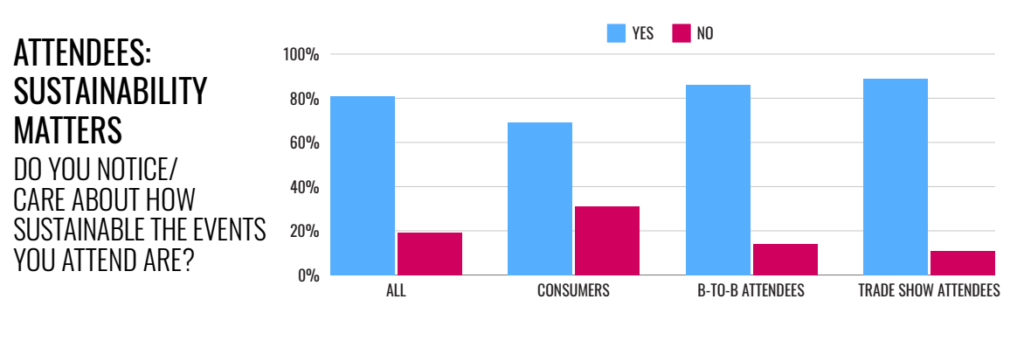
Sustainability is no longer optional.
67% of attendees consider sustainability when evaluating event organizers. That’s not activists. That’s mainstream consumers.
This creates both a challenge and an opportunity for brand activation companies.
The challenge is obvious: experiential events produce waste. Booth materials, promotional items, printed collateral, food service—it all adds up. Traditional activations weren’t designed with sustainability in mind.
The opportunity is in redesigning them.
Sustainable brand activations don’t just reduce environmental impact. They enhance brand perception. When people see that you’ve thought about the waste, the materials, the energy use—it signals that you care about more than just the activation itself.
This doesn’t mean every activation needs to be zero-waste. It means being intentional about the choices you make. Reusable materials instead of single-use. Digital check-ins instead of printed badges. Local sourcing to reduce transportation emissions.
Small changes compound. And consumers notice.
The Human Element: Staffing and Brand Ambassadors

Technology gets a lot of attention in experiential marketing.
But people matter more.
The brand ambassadors, event staff, and on-site teams are the ones who actually deliver the experience. They’re the face of your brand. They’re the ones having conversations, answering questions, and creating moments.
This is why staffing matters just as much as strategy.
A great activation with mediocre staff produces mediocre results. A good activation with exceptional staff can overperform. The difference is in the details—how someone greets attendees, how they handle questions, whether they understand the brand well enough to speak about it naturally.
Brand activation companies that understand this invest in their people. They train them. They brief them thoroughly. They match the right personalities to the right activations.
And they measure performance not just in outputs, but in interactions. How many meaningful conversations happened? How many people left with a positive impression? How many would recommend the brand based on their interaction with staff?
These are harder metrics to track. But they’re the ones that matter.
Geographic Considerations for Brand Activations
Not all markets are the same.
What works in New York might not work in Nashville. What resonates in Los Angeles might fall flat in Louisville. Cultural context matters. Local preferences matter. Even something as simple as weather can make or break an outdoor activation.
This is why national and multi-market campaigns require more than just replication. They require adaptation.
The best brand activation companies understand this. They don’t just scale the same activation across markets. They customize it. Same core concept, different execution.
For brands operating across multiple regions, this creates a choice: work with multiple local agencies or work with one agency that has national reach.
Both approaches work. Local agencies bring deep market knowledge. National agencies bring consistency and efficiency. The right choice depends on your priorities.
If local relevance is paramount, multiple agencies might make sense. If consistency and simplified logistics matter more, a national partner is better.
Either way, the geographic dimension can’t be ignored. An activation that works everywhere probably doesn’t work anywhere particularly well.
The Takeaway
Brand activation isn’t about being louder.
It’s about being felt.
GCES helps brands turn ideas into experiences—experiences people step into, interact with, and remember long after the activation ends.
That’s experiential marketing done right.
The industry is moving toward this. Budgets are following. Consumer behavior is already there. The question isn’t whether experiential marketing works. It does. The question is whether you’re using it the way it’s meant to be used—to create connection, not just coverage.
FAQs
What do brand activation companies do?
Brand activation companies design and execute experiential marketing campaigns that help audiences interact with a brand through live events, pop-ups, product sampling, and digitally integrated experiences, rather than passive advertising.
How is brand activation different from traditional marketing?
Traditional marketing focuses on delivering messages, while brand activation focuses on creating experiences that encourage participation, emotional connection, and engagement both on-site and online.
What services do brand activation companies typically offer?
Most brand activation companies offer interactive event marketing, pop-up retail experiences, product sampling campaigns, social media–ready activations, and full-service support from concept development to execution and measurement.
How do brands choose the right brand activation company?
Brands typically compare creative capabilities, experiential expertise, execution reliability, digital integration, and the ability to measure campaign impact when shortlisting brand activation companies.
Are brand activation campaigns measurable?
Yes. Brand activation companies measure success using engagement metrics such as participation rates, dwell time, sampling conversion, social media interaction, and post-event brand recall. Event ROI typically ranges between 25% and 34%, with 50% of marketers reporting improved ROI from event investments.
Do brand activation companies support digital or virtual experiences?
Many modern brand activation companies offer virtual event solutions and integrate digital elements such as AR and hybrid experiences to extend reach beyond physical locations. 50% of corporate meeting professionals plan to use AI technology in their 2025 events.
When should a brand work with a brand activation company?
Brands often work with a brand activation company when launching new products, running experiential marketing campaigns, executing pop-up activations, or scaling interactive events across multiple locations. With 57% of B2C marketers and 55% of B2B marketers planning to execute more events in 2025, the demand for professional experiential support continues to grow.
What makes GCES different from other brand activation companies?
GCES combines experiential strategy, creative execution, and digital integration with a structured activation framework, helping brands deliver interactive experiences that are scalable, measurable, and designed for real audience engagement.
Are brand activation companies suitable for national or multi-market campaigns?
Yes. Many brand activation companies, including GCES, support national and multi-market experiential marketing campaigns with consistent execution and centralized strategy. With global experiential marketing spend crossing $128.35 billion in 2024, the infrastructure for large-scale activations is more developed than ever.